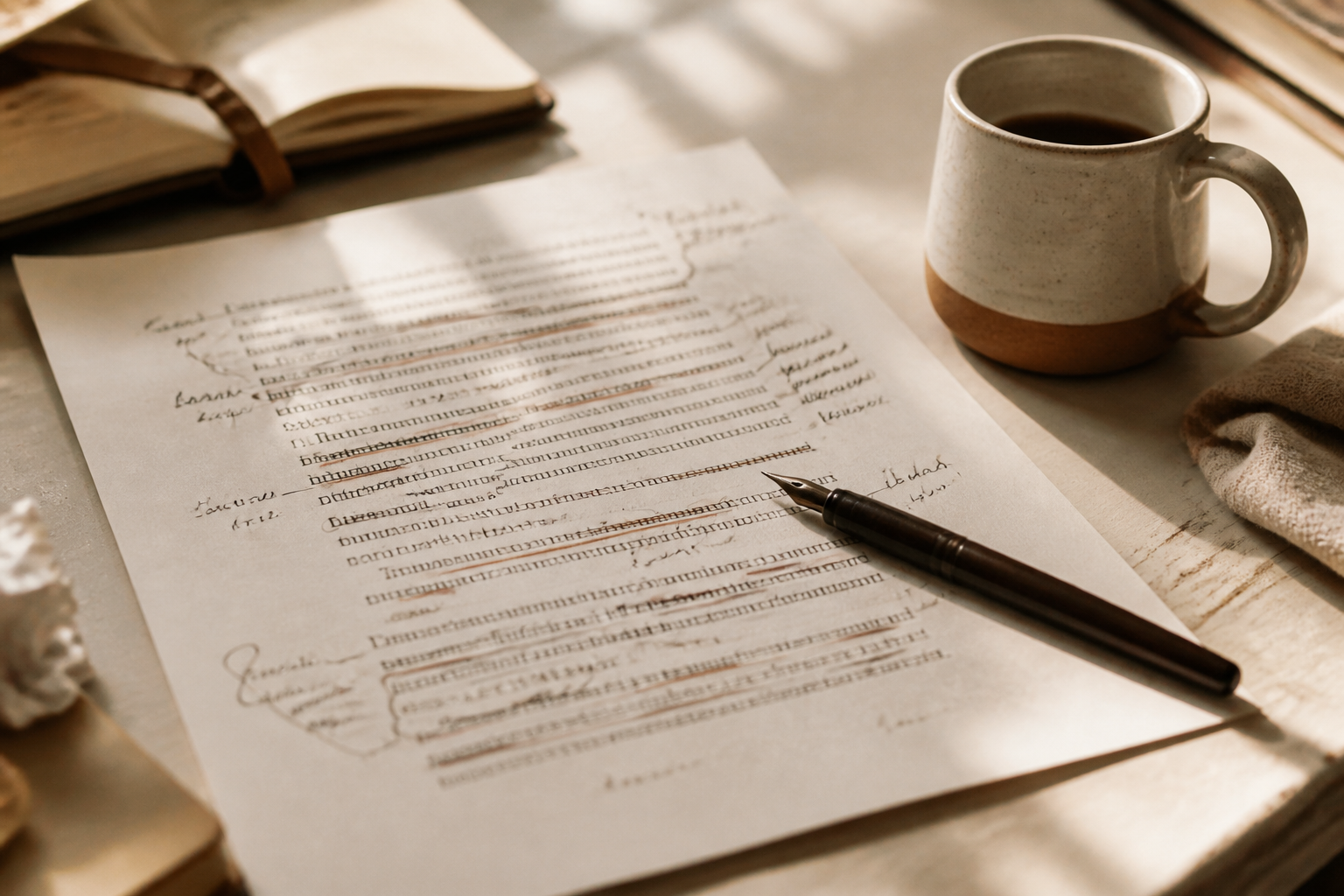
People talk about prompting like it's the craft. Get the wording right, stack the context, ask for the tone you want. And sure — that matters. A vague ask gets you a vague page. But I've started caring more about the hour after the reply lands.
That's when the work actually starts. The model has handed you something fluent, usually too fluent. Sentences that slide. Paragraphs that know how to sound finished. You can publish that if you want. Plenty of people do. I can't — not because I'm precious about authorship, but because the first pass almost never sounds like me.
So I read it the way I'd read a stranger's draft. Where does it get polite where I'd get sharp? Where does it explain something I already know, or skip the weird detail that made me care in the first place? Where has it sanded off the hesitation that was the whole point?
I rewrite out loud sometimes. If I wouldn't say it to a friend over coffee, it probably doesn't belong on the page — even if the grammar is cleaner than mine. The machine loves balance and symmetry. I love the sentence that tips a little too far and then recovers. That tip is usually the part worth keeping.
There's a myth that using these tools means you're outsourcing the thinking. Sometimes people are. I've done it on tired evenings when I just needed a list or a summary. But the interesting use, for me, is closer to collaboration with a very fast junior writer who has read everything and lived through nothing. They'll give you structure. They'll give you options. They won't give you the particular ache of your own week, or the joke only your circle would get, or the half-formed doubt you're still sitting with.
What happens after the prompt, then, is a kind of listening. You listen for the places the draft is smarter than you expected. You listen harder for the places it's pretending. You cut the pretending. You put your fingerprints back on the edges. You leave a little roughness on purpose.
I've stopped measuring a good session by how fast I get to "done." I measure it by whether the final version still has a pulse — whether someone who knows me would recognize the voice even if they didn't know a model helped along the way. If they wouldn't, I go another round. The prompt was only the door. The room is the rewriting.